Making and Unmaking Digital Wor(l)ds
García — Milani
Introduction
Hello world!
Let’s briefly introduce ourselves.
From a Collective Point of View…
Collaborators at C.I.R.C.E. — Centro Internazionale di Ricerca per le Convivialità Elettriche (International Research Centre for Electric Convivialities)
Genealogy:
- Different skills (hacking, translations, training, philosophy, social media strategy…)
- Tinkering with machines since eighties
- South Europe hackmeetings
Aims and Players
- This course will focus on our interactions in “digital worlds”. We will intend to improve our resilience to potential decentralised media “manipulation”. How?
- by providing a minimal theoretical background (philosophy)
- by reflecting on the signification chains they involve (semiotics)
- by bringing to light and differentiate various technological layers (technology)
- by practising and experiencing in various ways digital worl(d)s and exercising an “oblique gaze” (“hacker pedagogy”)
- Players (the subjects and objects of this course) will include:
- Humans → teachers and students
- Non-humans → computers, smartphones, cables, electromagnetic waves, beamer…
- Techniques → languages, learned behaviors, automatisms…
Hacking?
The terms “hacking” are “hacker” are (too) often associated with “illegal security hacking”. In this sense a hacker is “someone who utilizes their technical know-how of bugs or exploits to break into computer systems and access data which would otherwise be unavailable to them” (Wikipedia).
Nowadays, the so-called “ethical” hackers have changed somewhat that representation of hackers. But “ethical hackers” are in fact (legal) security hackers.

Figure 1: source: whatismyipaddress.com
What kind of hacking?
Figure 2: Pedagogia Hacker… (All right reserved)
Hacking is finding and building your own path, your own way to deal with digital worlds.
It can be a shortcut, or just another way.
Adopting a hacker attitude is being curious and sharing your research/findings/ideas. You can be more or less technical skill but you are eager to play and understand.
Hacker Pedagogy as a Self & Mutual Education Process
Hacker pedagogy is inspired from hacker attitude to disassemble different components of our digital world in order to understand and play with them better.
In other words:
- Unveiling layers | interactions (and players), interfaces, translation processes…
- Applying the “hands on” motto | looking what’s under the hood, and transforming our devices…
- Being curious and sharing
- Playing at being “anthropologists” | observing ourselves and exercising an oblique gaze on our own practices (and “hacking” ourselves)
How to “Hack” This Course?
- Take it as it is: a playful workshop!
- Enjoy it, no stress, nothing to learn by heart!
- Exam in 2 parts:
- Group work (same grade for all group members 30%), you’ll have to follow a methodology that we’ll discover step by step during the course. We will provide you a complete example.
- Term paper (individual 70%): based on the same canvas as the group work, write a short account of your interactions with one/some digital tool(s)/platform(s).
Today
Morning:
- Theoretical Iteration: Technology, Alienation, and Culture. A Framework
- Practical Iteration: Sociometry
Afternoon:
- Theoretical Iteration: Interfaces
- Practical Iteration: Let’s play video games
Theoretical Iteration: Technology, Alienation, and Culture. a Framework
So close and so far from the machines
One of the founding hypothesis of this course is that we live today a very paradoxical situation : we are surrounded by digital devices, we use them on a daily basis (and we sometimes no longer know how to live without them) but (unless if we hack them) we don’t know them in depth (for a large part, we use them as black boxes).
Gilbert Simondon called that phenomenon “alienation”.
Simondon’s Philosophy of Technology
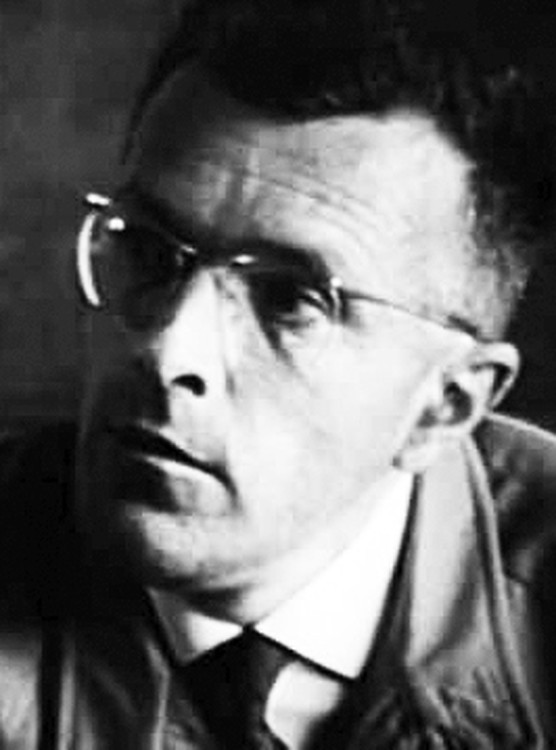
Figure 3: Gilbert Simondon (1924–1989)
Simondon developed a complex methodology for studying technical objects and their “mode of existence”.
- According to him, philosophers have talked a lot about technique and technology, but they ignored almost everything on the topic.
- He criticizes “technical alienation”, which is caused by a general lack of technical culture.
The two dimensions of the technical objects
Simondon distinguishes :
- the “objectivity” of technological objects : the form, the genesis and the constitution of the object, their technological “essence” (what and how they are from a stricly technological point of view). How they reach a higher degree of concreteness in their associated milieu.
- the “objectality” of technological objects : their “free adventure” (which is not limited to how it is used) once they are introduced into the social sphere. How the technological objects transform our society and psyche (“psycho-social dimension”).
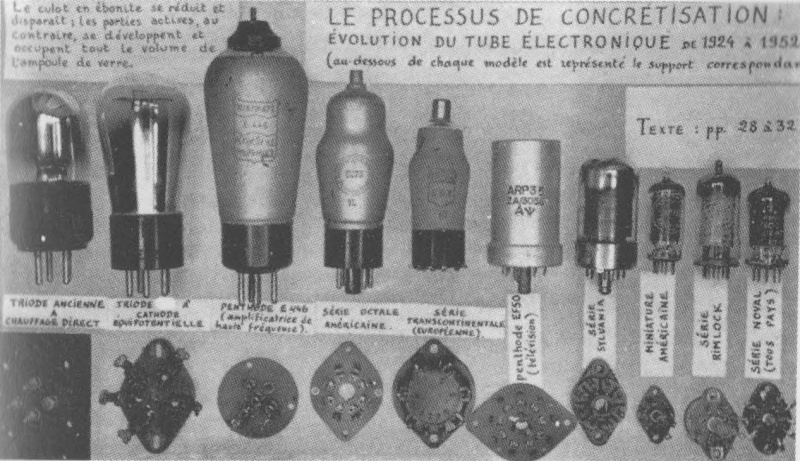
Figure 4: A lineage. The evolution of Vacuum tubes.
The Renault Frégate example

In the fifties, this car was incredibly aerodynamic. But it did not correspond to people’s representation of aerodynamics. People tended to prefer other “aerodynamic” cars that, in fact, were not aerodynamic (from a purely technical point of view)
Try to give us other examples (digital objects).
But Wait a Minute
Let’s listen to Simondon.
Who can understand that? Simondon speaks a very… technical language. Instead of being too theoretical let’s grasp some concepts playing.
Practical Iteration: Sociometry
Introduction
Before introducing sociometry, let’s explain why we do this.
Simondon’s framework expose different ways of understanding technical objects and how we interact with them…
But how present technical object produce any representation of our interactions? Or, do they actually create the fabric/substratum for our interactions?
What is Sociometry?
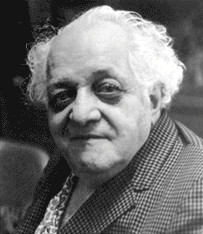
Figure 5: Jacob Levy Moreno (May 18, 1889 – May 14, 1974)
- Romanian-American psychiatrist, psychosociologist, and educator;
- Founder of psychodrama;
- Foremost pioneer of group psychotherapy.
Sociometry - Distance From
- Digital technologies are very important for my work
- Digital technologies are very important for my personal relationships
- It is practically impossible to conclude a deal without digital technologies
Sociometry - Line
Line up…
- I use digital devices… A little, much, with passion?
- I use digital devices to interact with humans… A little, much, with passion?
Sociometry - Grape
- Put your hand on the shoulder of the person you would ask to solve a technical problem
- Put your hand on the shoulder of the person you would talk about a personal problem
- Put your hand on the shoulder of the person you would seek advice about a business problem
Humans + Non Humans + Domination = Megamachines
MegaMachines (Lewis Mumford) are composed by gears… Human gears before mechanic gears
⇒ When we interact with digital devices, we execute a procedure. This procedure is developed by others, and produce data to feed their databases and their algorithms.

Figure 6: Lewis Mumford (1895–1990)
Pause: Let’s Introduce a Tool
The Pad
- https://go.circex.org/stgallen
- It is an etherpad lite instance (see: https://etherpad.org).
Pad
- free software (Apache license)
- associative friend server
- Data deletion after 1 month, Matomo analysis software configured to respect the non-tracking choices.
no third party javascript and cookies
Do you understand every point?
You will at the end of the course
PAUSE: A Letter Can Change Everything
Why http and not https?
Theoretical Iteration: Interfaces
A Gentle Introduction to Interfaces
Hacking always requires a starting point.
And generally, you start digging from the elements you can directly see and access…
Interfaces Are Everywhere
Interfaces mediate a large part of our relations with digital objects.They are of different kinds:
- hardware, e.g. the buses (as the Universal Serial Bus), historically called “data highway” to transfer data between components;
- software;
- peripherals, e.g. input devices (keyboard, webcam), output devices (screen, speaker, printer) I/O devices (USB flash drive, memory card);
- and sometimes a combination of these (touchscreen)
⇒ An interface is a shared and porous boundary, a kind of filter or a place for translations that allows the communication between two or more components of an information system.
Etymology
The term “interface” first appeared in the late 19th Century in the physical sciences.
In thermodynamics, first, to describe the threshold between two thermodynamic systems. In hydrostatics, then, to refer to the surface of encounter between two different substances.
For a long time, it has mostly been used in the scientific world.
Re-Emergence
It re-emerged in the cybernetics field (development of information systems) and it was re-coined in the 60’s by the media theorist Marshall McLuhan who used it in the sense “place of interaction between two systems” (cf. etymonline.com).
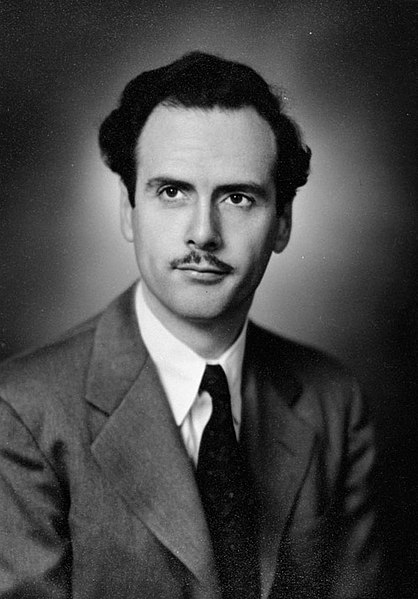
Figure 7: Marshall McLUhan (1911-1980)
In information systems
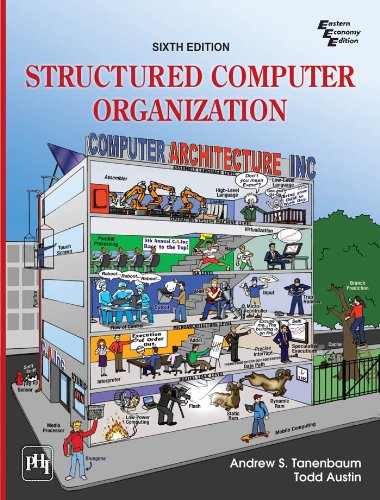
Figure 8: Structured Computer Organization (book cover)
It is within the contexts of computing and information systems, and according to the division of labor in engineering and specifically computer industry, that the notion of interface(as we generally use it nowadays) has been theorised and put into practice.
Information systems are developed and structured into layers, functional components ordered sequentially and hierarchically that interact with other layers by means of an interface (see: Andrew S. Tanenbaum, Structured Computer Organization).
HCI
A new research field called HCI (Human–computer interaction) emerged in the 80’s, with the rise of personal computing. It has been dedicated to the research and development in the design and use of computer technology.
It has focused on one kind of computer interfaces, the ones between human beings and computers (not the ones between internal layers) (the main “place of interaction”).
Interfaces for mass consumption products
As the idea of “personal computing” aimed at the transformation of computers in mass consumption products, the industry tried to create interfaces presupposing a lack of technical understanding of how a computer and its different elements work (insisting on the objectal dimension and obfuscating the objective dimension, in Simondon’s terms).
User Friendly Tools
⇒ Computers should be able to be used as user-friendly (requiring a very minimal technical understanding and offering a limited but relevant range of uses) tools (which implies a particular reading of what technological objects are) allowing to automatise laborious tasks.
The “User Interface”
Nowadays, the industry often uses the term “user interface” to refer to the only (graphical) interface end-users (are supposed to) interact with.
But theses “user interfaces” are just the “main doors”. There are many interfaces in digital objects and they are more or less (easily) accessible to human beings.
One Object, Different Interfaces
But don’t be fooled. We can access the same object through different interfaces.
Try to interact with the same object : google.com through 2 different interfaces at least
E.g. : Google (via a graphical browser, a textual browser, and curl)
Obviously We Are Simplifying
Nowadays, with the development of Internet and the WWW, as Matryoshka dolls, GUI themselves consists of a complex set of nested visible layers (and interact with a more complex set of layers under the hood).
We will try to (un)cover some of them. But before, let’s start with something very simple.
Reflecting on one kind of interface: That Good Old Dashboard
While we stressed on digital objects interfaces, they did not emerge from scratch.
Let’s catch a glimpse of an ancestor, the dashboard, and make some comparisons.
The First Dashboard
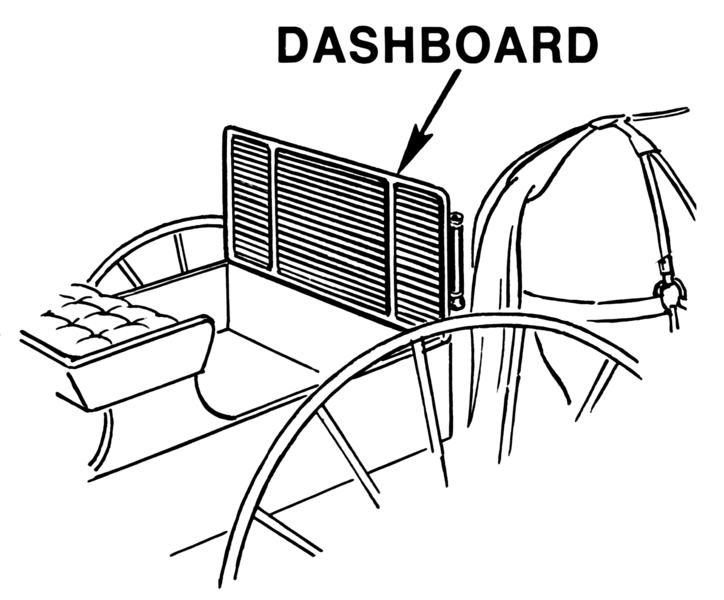
Figure 9: First dashboards
“Originally, the word dashboard applied to a barrier of wood or leather fixed at the front of a horse-drawn carriage or sleigh to protect the driver from mud or other debris ”dashed up“ (thrown up) by the horses’ hooves. […] Commonly these boards did not perform any additional function other than providing a convenient handhold for ascending into the driver’s seat…”
And then…
… “However, as car design evolved to position the motor in front of the driver, the dashboard became a panel that protected vehicle occupants from the heat and oil of the engine. With gradually increasing mechanical complexity, this panel formed a convenient location for the placement of gauges and minor controls, and from this evolved the modern instrument panel, although retaining its archaic common name (Wikipedia)”
Now Observe
What do the elements of this dashboard refer to?
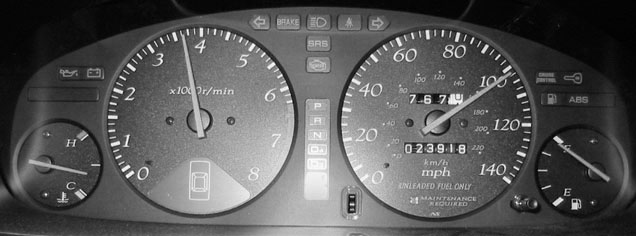
⇒ They give informations about different layers of the technical object.
Digital Dashboards
And now?
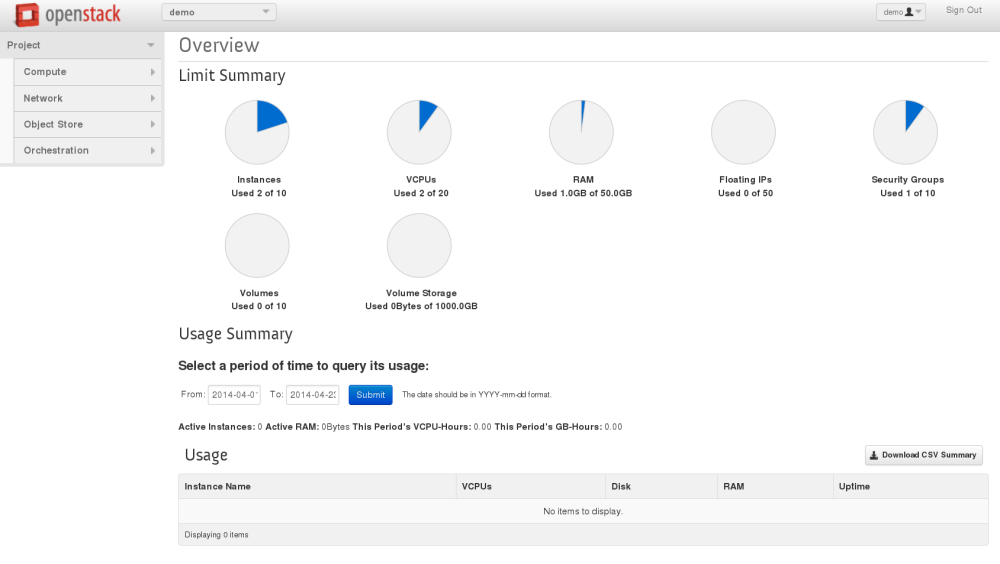
Nowadays, digital interfaces often mimic analogical dashboard instrumentation. They offer a set of entry points to a layered technical system.
New Kinds of Dashboards
But digital objects introduced new kind of dashboards.
Shannon Mattern, “Mission Control: A History of the Urban Dashboard”, in Places, 2015 https://placesjournal.org/article/mission-control-a-history-of-the-urban-dashboard/
The Bloomberg terminal
“The Bloomberg terminal which debuted in 1982, allowed finance professionals to customize their multi-screen displays with windows offering real-time and historical data regarding equities, fixed-income securities, and derivatives, along with financial news feeds and current events (because social uprisings and natural disasters have economic consequences, too), and messaging windows, where traders could provide context for the data scrolling across their screens. Over the last three decades, the terminals have increased in complexity. As in a flight cockpit, the Bloomberg systems involve custom input devices: a specialized keyboard with color-coded keys for various kinds of shares, securities, markets, and indices; and the B-UNIT® portable scanner that can biometrically authenticate users on any computer or mobile device.”
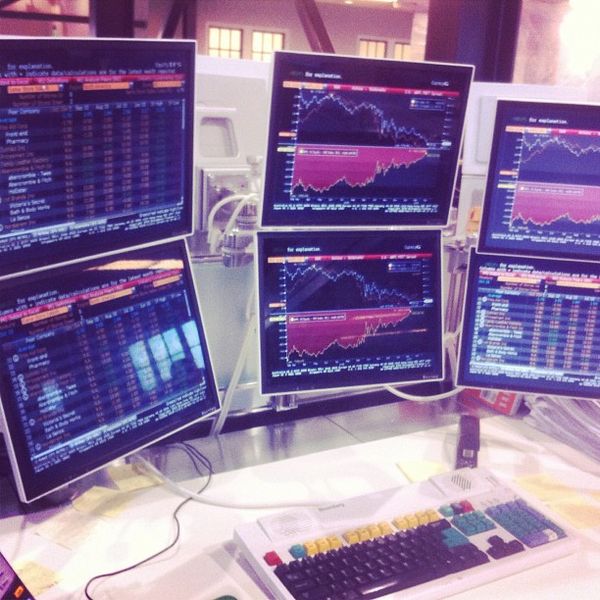
Figure 10: A bloomberg terminal
A bloomberg terminal in 2009
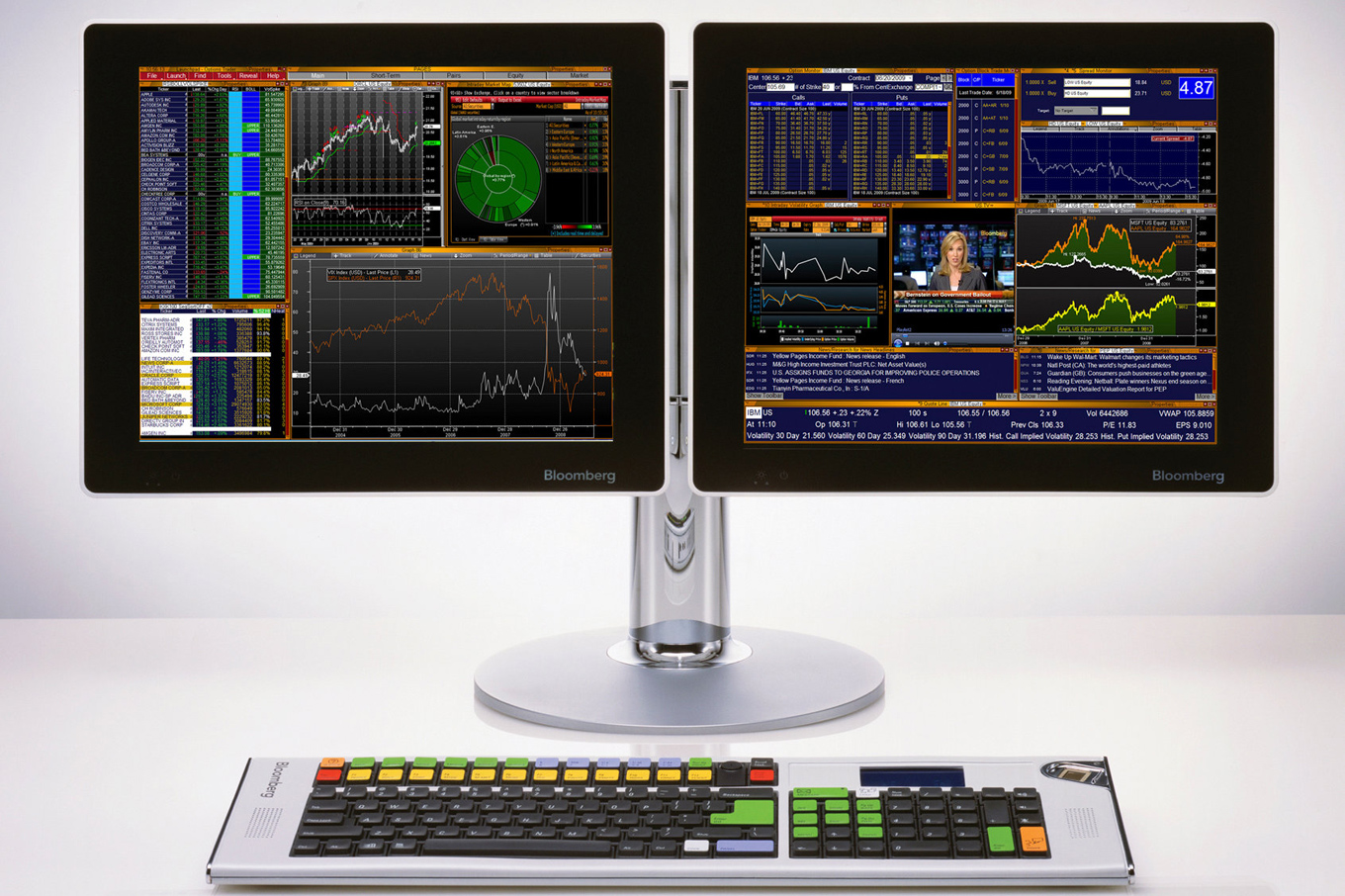
What do the elements of the dashboard refer to?
What differences can you see with the previous dashboards?
Let’s Take Another Example
“In 2012, London launched an “alpha” prototype of the City Dashboard that powers the mayor’s wall of iPads. 13 Created by the Bartlett Centre for Advanced Spatial Analysis at University College London, and funded by the government through the National e-Infrastructure for Social Simulation, the web-based platform features live information on weather, air quality, train status, and surface transit congestion, as well as local news.”
The London City dashboard
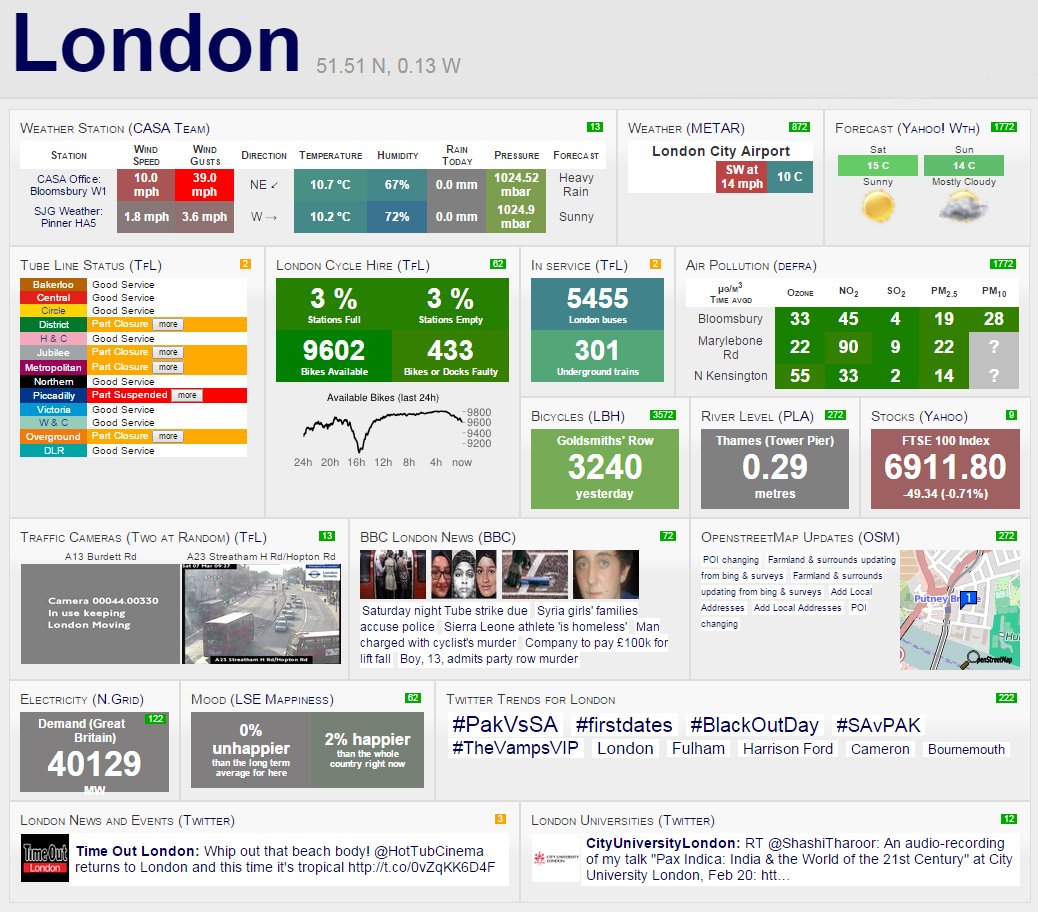
What do the elements of the dashboard refer to?
What differences can you see with the previous dashboards?
Mediating our daily life experience
⇒ In that case the dashboard is not “domain specific”
- few technical, in every sense of the word, terms and considerations,
- it relates to the space, to the everyday life (and digitalize some of these aspects);
- It aims at directly mediating our daily life experience.
All interfaces are not dashboards
The dashboard is just one kind of interface. So why focusing on it:
- Other kinds of interface can integrate dashboard elements (it remains a model)
- It is a very simple example because it is referential (there is a reference to a reality outside the signs)…
- It invites us to pay attention to the semiotic dimension of interfaces : what symbols or signs are chosen (literal and figurative language)? What are the denotations and connotations (second levels of meaning) at stake ?
Practical Iteration: Let’s play video games
What You Have to Do
- Forget your knowledge
- Clean up your mind
- Notice details
- Take notes
- Share and collaborate
Short ride in the history of videogames
Wait a minute!
Why did we do that?!